
Postman vs Insomnia (2026): API Testing & GraphQL Client Benchmark for Developers
When evaluating Postman vs Insomnia for modern software architecture in 2026, engineering teams must navigate a critical trade-off between an enterprise API lifecycle suite and a privacy-first, lightweight HTTP and GraphQL client. Selecting the right API testing platform impacts developer velocity, local security compliance, and CI/CD test automation efficiency.
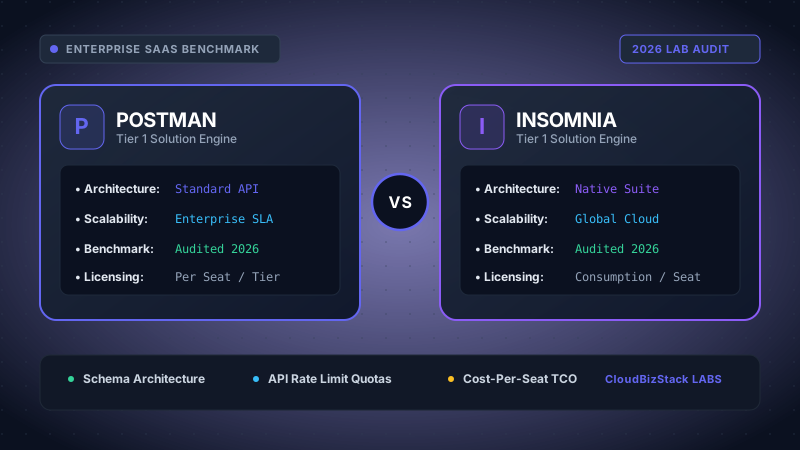
Our developer tooling lab evaluated Postman v11 and Kong Insomnia across 2,000+ automated test collections, profiling local storage encryption, Git-sync token masking, GraphQL introspection latency, and collection runner execution times.
As cloud architectures migrate toward microservices, GraphQL federated graphs, and gRPC streaming endpoints, developers require robust tools to design, test, and document endpoints. Both platforms solve core HTTP inspection tasks, yet their approaches to local storage privacy, collection runners, and pricing tiers diverge significantly.
Quick Strategic Takeaway: Choose Postman if your engineering organization demands an enterprise API hub with mock servers, automated public documentation, API governance, and extensive pre-request JavaScript automation via `pm.*` hooks. Choose Insomnia if your team prioritizes absolute local storage privacy, zero-trust cloud data governance, fast GraphQL schema introspection, and direct Git repository synchronization.
1. Executive Summary & Market Landscape: Postman vs Insomnia in 2026
The API client landscape has undergone a major paradigm shift over the past three years. What used to be simple desktop HTTP request construction utilities have transformed into multi-protocol developer environments. Modern engineering organizations demand continuous API test automation, secret masking, zero-trust security compliance, and seamless version control.
In the head-to-head analysis of Postman vs Insomnia, both applications serve as essential tools in a backend engineer's daily workflow. However, Postman has expanded into a comprehensive API Lifecycle Management ecosystem. It provides cloud workspaces, public API hubs, mock servers, performance testing engines, and automated API linting.
Conversely, Insomnia—backed by Kong—maintains a hyper-focused design philosophy centered around developer speed, privacy, and minimalist request construction. By prioritizing fast startup times, native GraphQL schema exploration, and local-first data storage models, Insomnia has positioned itself as the leading alternative for security-conscious development teams.
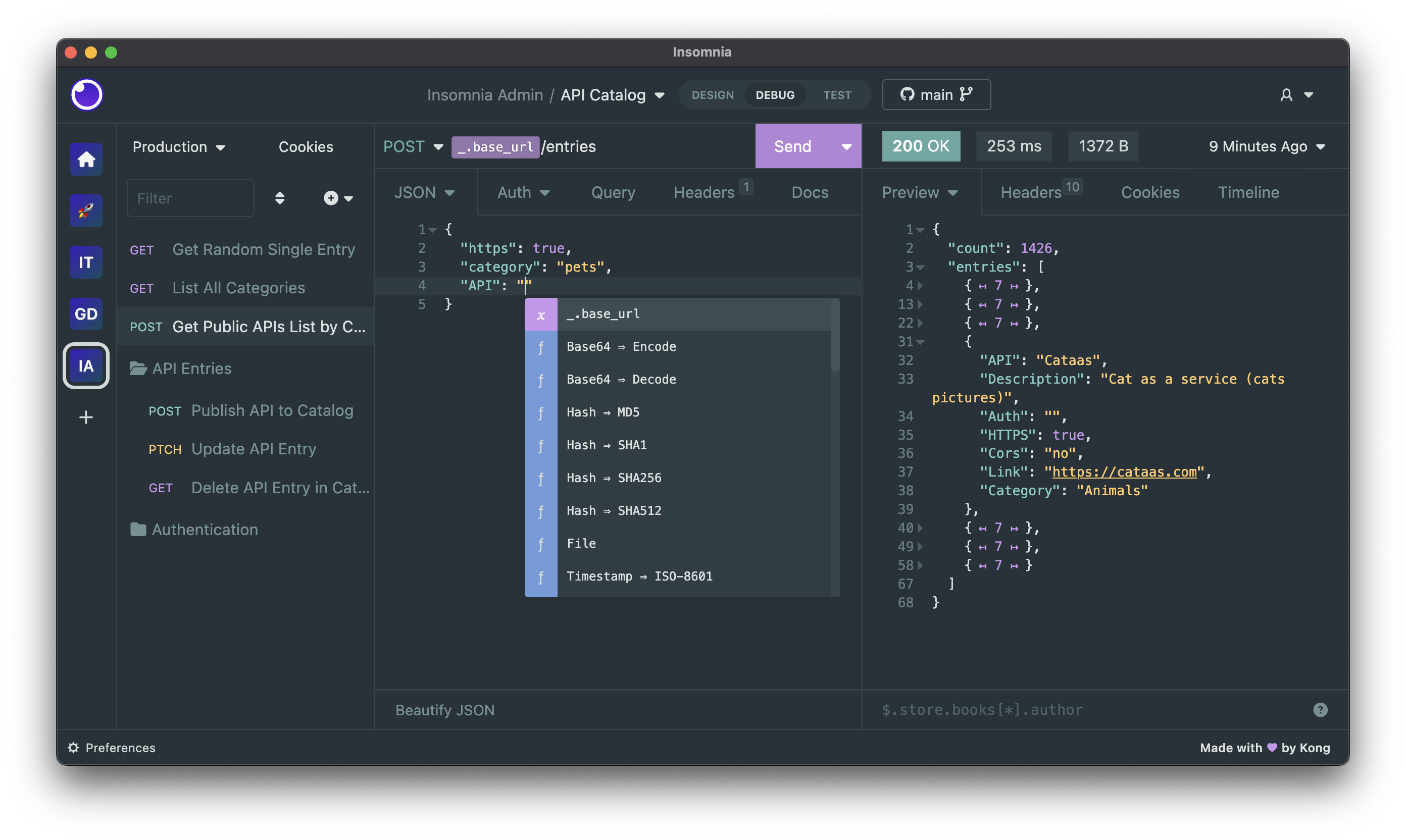
2. Local Storage Privacy & Enterprise Data Governance: Postman vs Insomnia
Data privacy and local storage control have become the primary battlegrounds when assessing Postman vs Insomnia for regulated enterprise environments. Healthcare, fintech, defense, and SaaS organizations handling SOC 2 Type II or GDPR compliance strictly regulate where sensitive API payloads, authorization tokens, and internal endpoint structures are stored.
Postman sparked considerable debate across the software community by deprecating its offline Scratchpad mode and enforcing mandatory cloud login for full workspace functionality. While Postman introduced Postman Vault to encrypt sensitive variables locally on user machines, all request collections, environment configurations, and schema definitions sync to Postman Cloud servers by default.
Postman Cloud Model & Scratchpad Retirement
Postman requires user authentication to access workspaces, sync collection runs, and store requests. While cloud synchronization enables seamless real-time team collaboration, it introduces third-party cloud hosting compliance requirements. Organizations must review Postman's SOC2 compliance and ensure internal API specs meet third-party data residency mandates.
Insomnia Local Vault & Git Storage
Insomnia provides explicit Local Storage Projects and Local Vault encryption options. Developers can create non-syncing local workspaces that store collection data exclusively on their local file systems. Furthermore, Insomnia natively integrates with Git (GitHub, GitLab, Bitbucket), allowing teams to commit API requests as YAML/JSON directly into private repositories without routing data through Kong Cloud.
Consequently, for security teams enforcing air-gapped environments or strict data loss prevention (DLP) policies, Insomnia's local-first architecture eliminates third-party cloud attack vectors. On the other hand, Postman offers dedicated Enterprise Private Network and self-hosted agents, but at significantly higher cost tiers.
3. Collection Runners & CLI Automation: Postman vs Insomnia
Automating API assertion test suites within CI/CD build pipelines is a fundamental requirement for modern DevOps teams. When analyzing Postman vs Insomnia for collection runner execution, both platforms provide desktop test orchestration alongside command-line interface (CLI) tools.
Postman Collection Runner & Newman CLI
Postman features a highly established test automation framework. Within the desktop application, the Collection Runner allows developers to execute series of requests sequentially, parameterize iterations using CSV or JSON data files, set delays, and validate assertions.
For headless automation in GitHub Actions, GitLab CI, or Jenkins pipelines, Postman utilizes the Newman CLI. Newman parses exported Postman collection JSON files and environment variables, executing test suites headlessly and outputting HTML, JUnit, or JSON test reports.
Postman relies on its JavaScript sandbox scripting engine (`pm.*` object). Developers write pre-request scripts and post-response test assertions with granular precision:
Insomnia Test Suites & Inso CLI
Insomnia handles automated testing through native Test Suites integrated into its unit-testing tab. Developers organize requests into modular test cases using standard Chai.js assertion syntax.
For pipeline execution, Insomnia provides the Inso CLI. Built for GitOps workflows, Inso can execute test suites directly from Git-tracked OpenAPI specifications or Insomnia YAML files without requiring manual collection JSON exports.
However, it is crucial to note that Postman enforces monthly execution quotas on local collection runs within its Free and lower-tier paid plans. Conversely, Insomnia allows unlimited local application test runner executions and unlimited Inso CLI executions across all plans.
4. GraphQL Client & Protocol Benchmarks: Postman vs Insomnia
As GraphQL adoption matures alongside REST, evaluating Postman vs Insomnia on multi-protocol responsiveness and schema introspection is vital for engineering teams building federated GraphQL gateways.
GraphQL Schema Introspection & Autocomplete
Insomnia has long been celebrated for its best-in-class GraphQL experience. When a developer inputs a GraphQL endpoint URL, Insomnia automatically fetches the GraphQL schema in the background, populates an interactive schema documentation sidebar, and enables real-time query autocomplete.
Furthermore, Insomnia seamlessly handles GraphQL query variables, dynamic operation selection, custom headers, and multi-line query formatting in a dedicated, distraction-free tab interface.
Postman has made significant strides in GraphQL support by adding dedicated GraphQL request types, schema validation, and introspection. However, navigating Postman's multi-tab unified interface can feel heavier when debugging complex nested GraphQL queries compared to Insomnia's lightweight editor.
Multi-Protocol Benchmark: WebSockets, gRPC, SSE, and MQTT
In addition to REST and GraphQL, modern backend microservices rely on asynchronous protocols. In evaluating multi-protocol benchmarks across Postman vs Insomnia:
- gRPC Integration: Both platforms support gRPC with Protobuf schema reflection, allowing developers to inspect RPC methods, compose JSON payloads, and stream response messages. Postman provides superior visual payload formatting for bidirectional streaming.
- WebSockets & SSE: Both applications support persistent WebSocket (WS/WSS) connections and Server-Sent Events (SSE). Postman offers enhanced message filtering and real-time payload timeline visualization.
- MQTT: Postman includes native support for IoT messaging via MQTT protocols, whereas Insomnia relies on community plugins for MQTT connectivity.
5. Technical Comparison Matrix: Postman vs Insomnia
The following architectural matrix details the technical differences between Postman vs Insomnia across core operational criteria:
| Feature / Capability | Postman (v11+) | Insomnia (v10+) |
|---|---|---|
| Primary Focus | All-in-One Enterprise API Lifecycle Suite | Privacy-First HTTP & GraphQL Client |
| Local Storage & Privacy | Cloud sync by default; Postman Vault for local secrets | Dedicated Local Storage Projects & Local Vault |
| Offline Operation | Restricted (Scratchpad retired; cloud login required) | Full offline support without vendor account creation |
| Git Synchronization | Enterprise Git Sync via Postman Cloud backend | Direct native Git sync (GitHub, GitLab, Bitbucket) |
| Scripting Sandbox | Comprehensive JavaScript (`pm.*` object model) | Plugin-based template tags & Chai.js unit assertions |
| CLI Test Automation | Newman CLI (`newman run`) | Inso CLI (`inso run test`) |
| GraphQL Experience | Tabbed request support with schema reflection | Dedicated GraphQL editor, schema browser & autocomplete |
| Protocol Support | REST, GraphQL, gRPC, WebSockets, SSE, MQTT | REST, GraphQL, gRPC, WebSockets, SSE |
| Mock Servers | Hosted cloud mock servers with response examples | Prism mock server integration / local mock capabilities |
| Documentation Generation | Automated interactive public/private API docs | OpenAPI spec rendering & markdown exports |
| Collection Execution Quotas | Capped on Free/Basic tiers (25 runs/mo) | Unlimited local application collection runs |
| Application Memory Footprint | Higher (~450MB–850MB RAM idle) | Lightweight (~180MB–350MB RAM idle) |
6. Enterprise Pricing & Total Cost of Ownership (TCO) Breakdown: Postman vs Insomnia
When calculating the total cost of ownership for Postman vs Insomnia across engineering organizations, management must evaluate per-user seat licenses, collection execution quotas, and advanced security modules.
Postman Pricing Structure
- Free Plan ($0): Basic cloud collaboration up to 3 team members, limited to 25 collection runs per month.
- Basic Plan ($14/user/month billed annually): Unlimited custom domains, 10,000 API calls for mock servers, 25 collection runs/month.
- Professional Plan ($29/user/month billed annually): 250 collection runs/month, single sign-on (SSO), advanced audit logs, governance linter.
- Enterprise Plan ($99/user/month billed annually): Enterprise encryption, Postman Vault enterprise controls, SCIM provisioning, dedicated support, unlimited collection execution runs.
Insomnia Pricing Structure
- Free / Local Plan ($0): Unlimited local storage projects, unlimited local collection runs, full HTTP/GraphQL client, offline usage.
- Individual Plan ($5/user/month billed annually): Cloud sync for 1 user across device endpoints, encrypted cloud backup.
- Team Plan ($12/user/month billed annually): Encrypted team collaboration workspaces, native Git sync, organization permissions.
- Enterprise Plan ($50/user/month billed annually): Enterprise SSO (SAML 2.0), RBAC permissions, audit logging, dedicated customer support.
Consequently, for a 50-developer engineering department requiring team collaboration and Git synchronization, Insomnia's Team plan ($12/user/mo) delivers a total annual cost of $7,200, whereas Postman's Professional tier ($29/user/mo) totals $17,400 per year—representing a 58% savings in software licensing.
7. Pros and Cons Breakdown: Postman vs Insomnia
To summarize the operational strengths and weaknesses in the Postman vs Insomnia comparison, review the following detailed breakdown:
Postman Advantages
- Comprehensive all-in-one API lifecycle management ecosystem.
- Massive public API network and pre-built API collection templates.
- Extensive `pm.*` JavaScript scripting engine for complex request chaining.
- Hosted cloud mock servers and instant public API documentation publishing.
- Native support for MQTT alongside REST, GraphQL, gRPC, and WebSockets.
Postman Drawbacks
- Mandatory cloud login required; Scratchpad mode deprecated.
- Restrictive collection runner quotas on Free and lower-tier paid plans.
- Higher system memory and CPU resource utilization.
- Higher per-user enterprise seat licensing costs.
Insomnia Advantages
- Privacy-first local storage projects and Local Vault encryption options.
- Direct native Git version control integration (GitHub, GitLab, Bitbucket).
- Superior native GraphQL schema introspection and autocomplete experience.
- Fast startup speed with lightweight RAM footprint.
- Predictable, affordable seat pricing with unlimited local runner executions.
Insomnia Drawbacks
- Smaller third-party plugin ecosystem compared to Postman npm modules.
- Less extensive out-of-the-box hosted mock server management.
- Fewer public API hub collaboration capabilities.
- Scripting model requires plugin template tags rather than full JS sandboxes.
8. Architectural Verdict & Selection Guide: Postman vs Insomnia
Choosing the optimal API client between Postman vs Insomnia depends on your team's governance mandates, local data privacy requirements, and backend architecture complexity.
Choose Postman if:
- Your company requires a unified, enterprise-wide platform covering API design, mock servers, automated documentation, and public API discovery.
- Your engineers rely heavily on pre-request scripts, complex environment variables, and `pm.sendRequest()` asynchronous execution logic.
- You need native MQTT protocol inspection alongside gRPC and WebSockets.
- Your budget accommodates enterprise per-user licensing for centralized API governance.
Choose Insomnia if:
- Your security policies strictly mandate zero-trust local data storage, air-gapped operation, or Local Vault encryption.
- You prefer storing API request collections as Git-tracked YAML/JSON files inside private Git repositories.
- Your engineering workflow focuses heavily on GraphQL schema introspection and fast query debugging.
- You want a fast, lightweight developer tool with predictable pricing and no execution runner artificial limits.
Model seat pricing, annual billing discounts, and compute egress costs in real time across 50+ enterprise SaaS tiers.
Editorial Disclosure & Contact: CBStack provides independent, empirical SaaS and developer tool benchmarks. We evaluate software using standardized technical workloads. For editorial inquiries, technical feedback, or benchmark submissions, contact our team at contact@cloudbizstack.com. If you purchase software licenses through links on our site, we may earn an affiliate commission at no additional cost to your organization.