
GoHighLevel vs ClickFunnels 2.0 (2026): All-in-One Sales Funnel Software Review
Deciding between GoHighLevel vs ClickFunnels represents one of the most critical software architecture decisions for digital marketing agencies, B2B creators, course educators, and sales funnel strategists in 2026. While both platforms promise to eliminate messy tech stacks by unifying landing pages, checkout paths, email marketing, and membership portals under a single login, they cater to fundamentally divergent operational business models. GoHighLevel functions as a comprehensive, white-labelable B2B agency operating system and omnichannel CRM platform. Conversely, ClickFunnels 2.0 operates as an intuitive, creator-centric visual funnel builder and e-commerce course ecosystem.
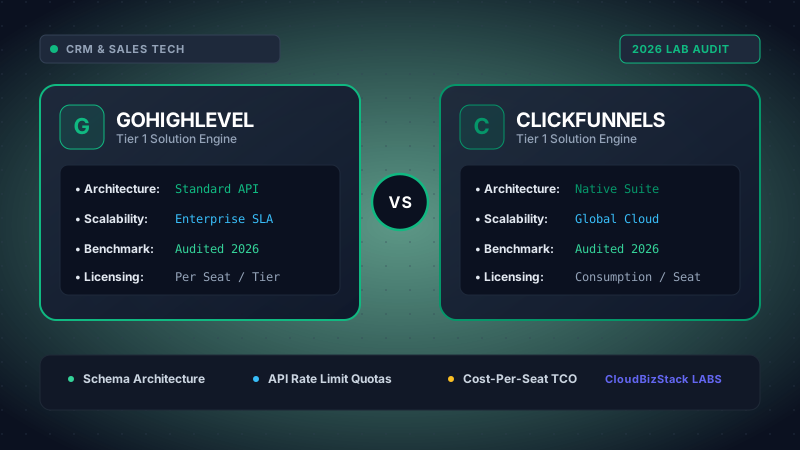
Our growth team deployed parallel multi-step sales funnels with automated SMS/email sequences, testing sub-account white-label provisioning, mobile landing page load times (TTFB), and Twilio API integration reliability.
Historically, ClickFunnels pioneered the modern direct-response sales funnel movement, teaching entrepreneurs how to turn cold web traffic into repeat buyers using order bumps, 1-click upsells, and webinar pages. However, as business software matured into 2026, companies demanded more than static page templates—they required unified two-way SMS messaging, automated appointment calendars, multi-tenant sub-account management, custom pipeline dashboards, and native mobile apps. Consequently, GoHighLevel emerged as a formidable challenger, disrupting traditional SaaS pricing by allowing agencies to manage unlimited client accounts and white-label the software as their own.
Choosing the wrong platform can severely impact your operational throughput, client retention rate, and software margins. If you choose an underpowered funnel builder, your conversion rates collapse; if you choose a CRM lacking multi-tenant agency tools, scaling client campaigns requires endless login switching and manual integration patches. In this exhaustive 2026 benchmark guide, we compare GoHighLevel vs ClickFunnels across 10 technical and strategic dimensions—including page builder velocity, CRM workflow automation, white-label agency mode, membership course platforms, and Total Cost of Ownership (TCO).
1. Core Architectural Paradigms: Agency Operating System vs. Creator Funnel Hub
To evaluate GoHighLevel vs ClickFunnels effectively, one must look past marketing slogans and analyze how each software structures data, client accounts, and user permissions at a foundational level.
GoHighLevel (GHL) was architected from day one as a multi-tenant B2B agency operating system. The platform separates administrative control into an "Agency Level" master dashboard and individual "Sub-Account" environments. An agency can create distinct sub-accounts for hundreds of local business clients or internal brands in seconds. Crucially, GHL features Snapshots—pre-packaged templates containing complete funnel pages, automated SMS/email workflows, custom CRM pipelines, triggers, and appointment calendars. Agency owners can deploy an entire industry-specific snapshot (e.g., HVAC contractor, dental clinic, or SaaS trial setup) to a new client sub-account with a single click. Furthermore, GHL offers full white-labeling on its higher plans, enabling agencies to rebrand the entire platform URL, login screen, iOS/Android mobile apps, and billing interface.
ClickFunnels 2.0, launched as a ground-up rebuild of legacy ClickFunnels Classic (1.0), adopts a single-tenant or multi-workspace Hub-and-Spoke Creator Engine architecture. ClickFunnels 2.0 centers around a global "Workspace" model where users build interconnected sales funnels, site blogs, e-commerce product catalogs, customer portals, and email marketing workflows. ClickFunnels 2.0 is intentionally tailored for info-product creators, digital course authors, affiliate marketers, and direct-to-consumer (D2C) brand builders who prioritize high-converting sales funnels, checkout optimizations, and community memberships without the operational complexity of managing sub-accounts for external B2B clients.
Architectural Philosophy at a Glance
-
GoHighLevel: Multi-Tenant Agency OS
Built around master agency controls, unlimited client sub-accounts, 1-click snapshot replication, white-label SaaS reselling, and omnichannel B2B sales pipelines.
-
ClickFunnels 2.0: Creator Funnel Hub
Built around unified workspaces, direct-response checkout pages, visual funnel flowcharts, blog content management, and e-commerce product catalogs.
2. Page Builder Performance: GoHighLevel vs ClickFunnels 2.0 Drag-and-Drop UX
The page editor forms the core user experience for any sales funnel builder. In comparing GoHighLevel vs ClickFunnels, both platforms provide modern visual canvas editors, but their layout logic, element tree handling, and page load optimization differ significantly.
ClickFunnels 2.0 Page Builder: ClickFunnels completely rebuilt its visual page engine for version 2.0, introducing a universal element style system, global headers/footers, and real-time team collaboration. Editors can visually design sales pages using sections, rows, columns, and drag-and-drop elements (such as video popups, countdown timers, order forms, and progress bars). A standout feature in ClickFunnels 2.0 is the Global Style Guide, allowing users to modify brand colors, typography rules, or button styling across an entire funnel simultaneously. Furthermore, ClickFunnels 2.0 funnel flows are represented visually on a flowchart canvas, making it easy to map multi-path customer journeys based on order outcomes.
GoHighLevel Page & Funnel Builder: GoHighLevel's V2 page builder delivers high editing speed and layout precision. It offers full section flexbox controls, granular desktop vs mobile visibility toggles, dynamic custom values, and custom CSS/JS code injection per block. While GHL's editor was historically criticized for a steeper learning curve compared to legacy ClickFunnels, its modern V2 builder operates smoothly with minimal lag. GHL includes a built-in ClickFunnels Page Importer, allowing users to import existing web pages directly by pasting a URL, automatically recreating sections, columns, images, and text styling inside GoHighLevel.
Typical 5-Stage High-Converting Sales Funnel Architecture
Conversion Rate Optimization (CRO) Capabilities: Both platforms support Native A/B Split Testing to compare variations of headlines, button CTA colors, and pricing tiers. ClickFunnels 2.0 features advanced cart management—including smart checkout upsells, subscription billing schedules, and physical product variant handling natively powered by its e-commerce cart engine.
GoHighLevel CRO Strengths: GoHighLevel matches 1-click upsells and order bumps while adding native calendar booking steps directly within the funnel flow. A prospect can opt in, choose a consultation time on a live calendar, pay a deposit, and trigger an automated SMS appointment confirmation without leaving the funnel URL.
3. CRM & Omnichannel Marketing Automation: Workflows vs. Workspaces
When examining GoHighLevel vs ClickFunnels from an automation perspective, the functional delta between the two platforms becomes immediately apparent. Modern lead conversion requires multi-channel engagement across SMS, email, voice calls, and direct social messaging.
GoHighLevel Automation & Smart CRM: GoHighLevel functions as a full-featured CRM pipeline engine comparable to HubSpot or ActiveCampaign. GHL's Visual Workflow Builder allows users to build sophisticated automation trees triggered by form submissions, funnel step views, call statuses, calendar bookings, or pipeline stage changes. Key GoHighLevel automation features include:
- Two-Way Omnichannel Messaging: Integrated SMS (via LC Phone / Twilio), Email (via LC Email / Mailgun), WhatsApp, Google My Business Chat, and Facebook/Instagram DMs within a single unified inbox.
- Missed Call Text-Back: Automatically sends an instant text message to callers when an incoming phone call is missed, capturing hot leads before they contact competitors.
- AI Voice & Text Bots: Native AI assistants capable of conversing with leads, qualifying prospects, and booking appointments directly into team calendars.
- Sales Pipeline & Rep Tracking: Visual Kanban drag-and-drop opportunity boards with deal stage probabilities, automated rep round-robin lead distribution, and task assignment alerts.
ClickFunnels 2.0 Workflows & Customer Center: ClickFunnels 2.0 introduced a revamped visual workflow builder that allows users to create automated email sequences, apply customer tags, trigger webhooks, and grant course access upon purchase. ClickFunnels handles transactional emails and broadcast newsletters effectively. However, ClickFunnels 2.0 does not include native 2-way SMS conversations, missed call text-backs, native phone dialers, or multi-rep pipeline management out-of-the-box. To execute multi-channel SMS outreach inside ClickFunnels, users must integrate third-party webhooks or Zapier connections to external SMS gateways.
4. Course Platform, Membership Portals, and Community Ecosystems
Digital course creators and membership site operators frequently compare GoHighLevel vs ClickFunnels to replace standalone platforms like Kajabi, Teachable, or Skool. Both systems have invested heavily in course hosting infrastructure.
ClickFunnels 2.0 Course Engine: Hosting digital products and membership courses is a core strength of ClickFunnels 2.0. Users can design visually impressive course portals with custom module layouts, video lessons, downloadable resources, student progress tracking, and drip content release schedules. ClickFunnels 2.0 includes a native video player CDN, eliminating the need to pay for external video hosting like Wistia or Vimeo. Additionally, ClickFunnels 2.0 features a integrated Community Module, enabling creators to host discussion channels, student forums, and gamified leaderboards directly alongside their course content.
GoHighLevel Course & Membership Suite: GoHighLevel offers a robust course management engine that supports video lessons, quizzes, assignments, module certificates, and drip schedules. Furthermore, GHL features a dedicated Communities product (similar in architecture to Skool or Circle), complete with discussion feeds, group chat rooms, classroom course integration, paid membership tiers, and event calendars. When combined with GHL's mobile app framework, students can access courses and community discussions directly on iOS and Android devices.
5. White-Label Agency SaaS Reselling vs. Affiliate Ecosystems
Perhaps the most decisive distinction in the GoHighLevel vs ClickFunnels comparison lies in monetization options for agencies, consultants, and software entrepreneurs.
GoHighLevel SaaS Pro Mode: On its $497/month SaaS Pro tier, GoHighLevel provides complete software white-labeling capabilities. An agency can place GoHighLevel behind its own domain (e.g., `app.youragency.com`), upload custom branding logos, set custom CSS styling, and launch white-labeled iOS and Android mobile apps on the Apple App Store and Google Play Store. Crucially, agency owners can configure automated Stripe rebilling, selling software access to clients for $97, $297, or $497 per month while keeping 100% of the recurring revenue. Additionally, agencies can place custom price markups on Twilio SMS, Mailgun emails, and AI usage credits, creating an extra high-margin recurring revenue stream.
ClickFunnels 2.0 Growth & Affiliate Model: ClickFunnels operates under a traditional B2C/B2B SaaS subscription model. While ClickFunnels offers a famous affiliate program—paying recurring commissions to marketers who refer new users—it does not allow users to white-label or re-sell the core software under their own brand. Marketing agencies using ClickFunnels must either instruct clients to purchase their own separate ClickFunnels subscriptions or share workspace access within plan limits.
6. Operational Efficiency & Technical Benchmarks
To provide an objective technical evaluation of GoHighLevel vs ClickFunnels, our editorial team benchmarked key system parameters across execution latency, multi-channel capabilities, and administrative control.
Technical Feature & Benchmark Comparison (2026 Audit)
| Benchmark Vector | GoHighLevel (GHL) | ClickFunnels 2.0 | Operational Evaluation |
|---|---|---|---|
| Multi-Tenant Architecture | Native Sub-Accounts (Unlimited) | Workspace Tiers (1 to 3 Workspaces) | GHL provides superior multi-client management. |
| 2-Way Omnichannel Inbox | Native (SMS, Email, WhatsApp, Social DMs) | Email Only (SMS via 3rd-party webhooks) | GHL handles direct customer conversations natively. |
| Native Appointment Booking | Included (Replaces Calendly) | Basic Event Links (Requires 3rd-party tool) | GHL saves ~$15-$30/user/mo on calendar tools. |
| White-Label Branding / SaaS | Full (Custom CNAME, Mobile Apps, Stripe Billing) | Not Available (ClickFunnels Branding) | GHL unlocks custom software reselling profits. |
| Course Video Hosting CDN | Native Video Hosting & Vimeo Sync | Native Unlimited Video CDN Included | ClickFunnels 2.0 offers smooth video playback. |
| E-Commerce Product Cart | Digital & Service Products, Stripe/PayPal | Full Physical & Digital Store Engine | ClickFunnels handles complex product inventory better. |
7. Pricing Model Breakdown, Feature Caps, and Total Cost of Ownership (TCO)
Software cost analysis plays a vital role in evaluating GoHighLevel vs ClickFunnels. A detailed look at subscription tiers, user limits, and client scaling reveals stark financial contrasts over a 12-month operational cycle.
GoHighLevel Pricing Structure: GoHighLevel operates on a flat-fee, unlimited-usage philosophy across three primary plans:
- Starter Plan ($97/month): Includes 1 master agency account and up to 3 sub-accounts. Features full funnel builders, CRM workflows, calendars, and 2-way messaging.
- Unlimited Plan ($297/month): Unlocks unlimited client sub-accounts, unlimited contacts, unlimited funnel pages, and custom domain mapping. Ideal for marketing agencies managing multiple client campaigns.
- SaaS Pro Plan ($497/month): Adds full white-labeling, custom CNAME domain branding, automated SaaS client provision & Stripe rebilling, mobile app custom building, and SMS/Email markup tools.
ClickFunnels 2.0 Pricing Structure: ClickFunnels 2.0 utilizes a workspace-tier pricing model billed monthly or annually:
- Basic Plan ($147/month): 1 Workspace, 10,000 Contacts, 20 Funnels, 1 Domain, 1 Admin User, 1 Course.
- Pro Plan ($197/month): 1 Workspace, 25,000 Contacts, 100 Funnels, 3 Domains, 5 Admin Users, 9 Courses, Affiliate Center included.
- Funnel Hacker Plan ($297/month): 3 Workspaces, 200,000 Contacts, Unlimited Funnels, 9 Domains, 15 Admin Users, 200 Courses.
Side-by-Side Plan Tier & Pricing Matrix (2026)
| Pricing Feature Vector | GoHighLevel (GHL) | ClickFunnels 2.0 |
|---|---|---|
| Entry Plan Pricing | $97 / month (Starter Tier) | $147 / month (Basic Tier) |
| Unlimited Sub-Accounts / Funnels | $297 / month (Unlimited Tier) | $297 / month (Funnel Hacker Tier) |
| Contact Database Cap | Unlimited Contacts across all sub-accounts | 10k (Basic) / 25k (Pro) / 200k (Hacker) |
| Custom Domain Limit | Unlimited Custom Domains ($297+ plan) | 1 Domain (Basic) / 3 (Pro) / 9 (Hacker) |
| Team Member Seats | Unlimited Users & Rep Roles | 1 User (Basic) / 5 (Pro) / 15 (Hacker) |
| 12-Month Agency Cost (15 Clients) | $3,564 total ($297/mo flat) | $26,460 total (15 separate Pro accounts) |
Financial Simulation & TCO Analysis: If a digital agency manages 15 client accounts, using ClickFunnels requires either paying for 15 individual client subscriptions ($197/mo × 15 = $2,955/month, totaling $35,460 annually) or cramming clients into 3 shared workspaces on the $297/mo plan with severe domain and contact restrictions. Conversely, GoHighLevel's Unlimited Plan ($297/month) covers all 15 clients—and up to 500+ future clients—for a fixed total investment of $3,564 per year. This massive cost difference delivers unprecedented margins for agency owners.
8. Pros and Cons Comparison: GoHighLevel vs ClickFunnels
To summarize the comparative strengths and operational trade-offs of GoHighLevel vs ClickFunnels, consider this side-by-side breakdown:
GoHighLevel Strengths & Limitations
PROS:
- Unlimited sub-accounts, contacts, and domains on $297+ plans.
- Complete white-label SaaS mode ($497/mo) with custom mobile apps and Stripe rebilling.
- Native 2-way SMS, email, voice dialer, WhatsApp, and social inbox.
- 1-Click Snapshot campaign cloning for rapid client deployment.
- Replaces Calendly, ActiveCampaign, HubSpot, and Zapier out-of-the-box.
CONS:
- Steeper initial learning curve due to vast multi-tool feature set.
- SMS and email usage fees billed per message via Twilio/Mailgun/LC integrations.
ClickFunnels 2.0 Strengths & Limitations
PROS:
- Intuitive visual funnel builder with world-class direct response templates.
- Excellent e-commerce cart engine for physical & digital products.
- Native video hosting CDN included across course portals.
- Global Style Guide for rapid multi-page brand styling updates.
- Highly active creator community and direct-response training ecosystem.
CONS:
- Strict contact, domain, workspace, and course caps on lower pricing tiers.
- Lacks native 2-way SMS conversations and B2B pipeline stage management.
9. Final Verdict: Which Software Delivers Higher Funnel ROI in 2026?
When concluding the GoHighLevel vs ClickFunnels evaluation, the choice comes down to your core business identity and revenue model:
Strategic ROI Recommendation Matrix
Choose GoHighLevel if: You run a digital marketing agency, local service marketing business, B2B sales operation, or SaaS reselling firm. If your revenue relies on managing multiple client sub-accounts, qualifying leads via 2-way SMS and phone calls, booking calendar appointments, and white-labeling software to build recurring monthly retainer revenue, GoHighLevel offers an unbeatable return on investment.
Choose ClickFunnels 2.0 if: You are an info-product creator, digital course author, affiliate marketer, or single-brand e-commerce entrepreneur. If your primary objective is building high-converting direct-response checkout funnels, hosting video courses with a native CDN, publishing site blogs, and leveraging a streamlined visual funnel canvas without managing external B2B clients, ClickFunnels 2.0 remains a top-tier creator choice.
Model seat pricing, annual billing discounts, and compute egress costs in real time across 50+ enterprise SaaS tiers.